русский
 Español
 عربى
 中文简体

Corrugated Close End Alloy steel Pellet Roller
Cat:Alloy steel 20CrMnTi
Alloy steel roller corrugated close ends are specialized components with distinct features and applications. Alloy steel ensures high durability, maki...
See Details


Content
Pellet mills depend on the coordinated performance of the die and press rollers. While the die forms the pellets, the roller transfers pressure, controls material movement, and supports stable production inside the compression chamber. A roller with unsuitable hardness, poor surface geometry, or insufficient dimensional accuracy can lead to slipping, uneven compression, excessive energy consumption, premature wear, and frequent production interruptions.
The 100Cr6 closed corrugation and dimpled pellet roller is designed to address these operating challenges. Manufactured from 100Cr6 spring steel, this roller combines a hardened wear-resistant material with a specialized surface configuration. Its closed corrugation helps maintain consistent contact with the raw material, while its dimpled pattern improves traction and feeding stability. Together, these features make the roller suitable for demanding pelletizing conditions in feed mills, biomass processing plants, fertilizer production, and other granulation applications.
This article explains the construction, working principles, technical advantages, manufacturing process, quality-control measures, installation requirements, and maintenance considerations of the roller. It also examines how the product compares with more basic roller designs and why a carefully engineered roller can improve the overall productivity of a pellet mill.
The product is a 100Cr6 roller with a closed corrugation and dimpled working surface. The roller belongs to the ring die and press roller product category and is intended for use in pellet machines where raw materials must be compressed through die holes under continuous pressure.
100Cr6 is a high-carbon chromium steel commonly selected for components that require high hardness, strength, fatigue resistance, and wear resistance. When correctly heat treated and finished, this material can withstand repeated rolling contact, abrasive particles, impact loading, and fluctuating compression forces. These properties are particularly important for pellet mill rollers because the component operates under high mechanical stress while exposed to feed particles, minerals, moisture, and heat.
The roller uses two complementary surface features. Closed corrugation consists of continuous or enclosed grooves that provide directional contact with the material. The dimpled pattern adds multiple localized gripping points across the roller face. Instead of relying on a smooth cylindrical surface, the roller engages the material through a controlled combination of ridges, grooves, and dimples.
The closed construction also helps contain material within the active compression area. This can reduce unnecessary material movement toward the roller edges and support more uniform distribution across the working width. The exact performance depends on the die specification, raw material, moisture level, roller clearance, rotational speed, and operating load, but the design is intended to provide stable engagement in demanding conditions.
| Item | Description | Operating Benefit |
|---|---|---|
| Material | 100Cr6 spring steel | High hardness, strength, fatigue resistance, and wear resistance |
| Surface design | Closed corrugation with dimpled contact areas | Improved traction and stable raw-material engagement |
| Application | Pellet mills using ring dies and press rollers | Suitable for feed, biomass, fertilizer, and related materials |
| Working function | Transfers compression force and assists material feeding | Supports consistent pellet formation and production stability |
| Surface treatment | Heat treatment and optional protective treatment according to requirements | Improved service life and resistance to operating damage |
| Manufacturing focus | Precision machining, controlled forming, inspection, and balancing | Reliable fit, reduced vibration, and consistent performance |
| Customization | Dimensions and surface configuration can be matched to equipment requirements | Supports replacement and application-specific integration |
The product should always be selected according to the pellet mill model, die diameter, roller diameter, roller width, shaft arrangement, bearing system, and production material. A roller that appears dimensionally similar may not perform correctly if its internal fit, working width, surface pattern, or hardness is unsuitable for the machine.
The press roller has a direct influence on how raw material enters the compression zone. A smooth roller may provide insufficient friction, especially when processing material with high moisture, low fiber content, or a fine particle size. Insufficient friction can cause sliding, unstable feeding, and localized loading. The operator may then compensate by increasing pressure or reducing production speed, neither of which is an ideal long-term solution.
Corrugation creates raised and recessed areas that interact mechanically with the material. The ridges can help draw material into the compression zone, while the grooves provide space for particles to move and reorganize. A closed corrugation design is intended to maintain this engagement across the active section of the roller rather than allowing material to escape easily from open-ended grooves.
Dimpled areas add a second form of surface interaction. Each dimple can act as a small contact pocket, increasing the number of engagement points between the roller and the material. This is useful when the raw material is cohesive, fibrous, slightly damp, or otherwise difficult to grip with a conventional surface.
The combination of corrugation and dimples should not be viewed as a decorative pattern. It is a functional working profile designed to influence friction, material distribution, compression stability, and wear behavior. The pattern must be manufactured accurately because excessive depth, inconsistent spacing, or irregular edges can create high stress concentrations and accelerate surface damage.
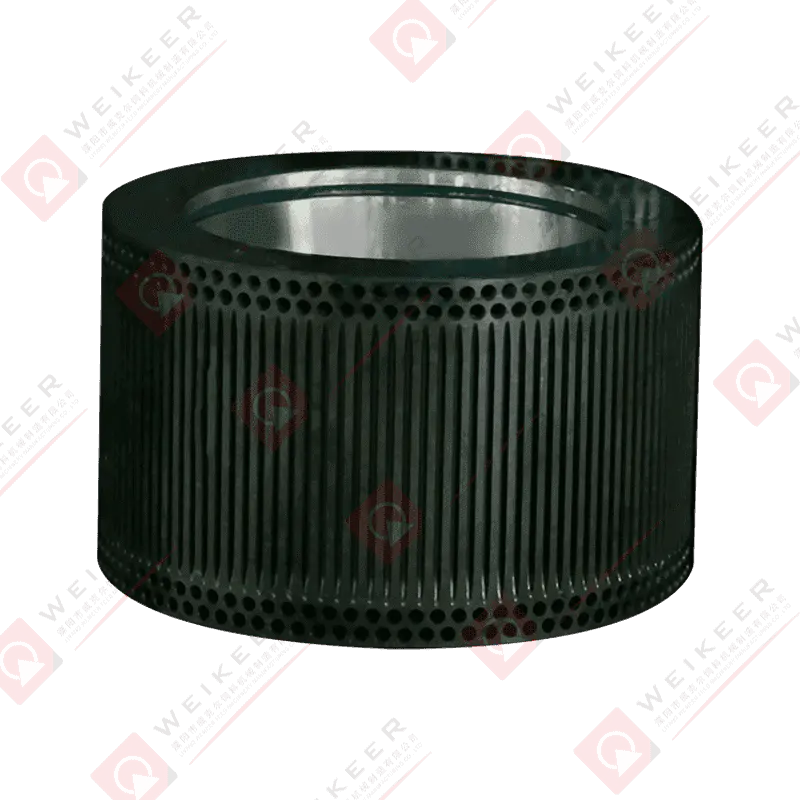
100cr6 Closed Corrugation And Dimpled Pellet Roller
Material selection is one of the most important factors in press roller performance. The roller must maintain its shape while exposed to continuous loading, repeated contact with the die, abrasive particles, and occasional shock caused by foreign material or uneven feeding. 100Cr6 is well suited to this type of application because it combines high hardness with useful mechanical strength.
Pellet raw materials can contain abrasive components such as minerals, husks, wood fibers, sand particles, and agricultural residues. As the roller rotates against the material and die, the working surface experiences continuous abrasive and adhesive wear. Properly heat-treated 100Cr6 can resist surface removal and retain its working profile for a longer period than ordinary low-carbon steel.
Maintaining the original profile is important. When a roller becomes excessively worn, it may no longer grip material evenly. The result can be reduced throughput, unstable pellet density, a higher proportion of fines, and increased pressure on the die. A wear-resistant roller helps preserve the intended operating geometry for a longer production cycle.
The roller and ring die operate in close proximity. Their contact relationship must withstand repeated compression without excessive plastic deformation. 100Cr6 can achieve a high and controlled hardness after suitable heat treatment, allowing the roller to resist indentation and flattening under normal operating loads.
High hardness alone is not sufficient. A roller that is extremely hard but improperly treated may become brittle and vulnerable to cracking. For this reason, manufacturing quality depends on the balance between surface hardness, core support, toughness, residual stress, and dimensional accuracy. Controlled processing is essential to obtain a working surface that is hard enough for wear resistance while retaining adequate resistance to impact and fatigue.
Press rollers rotate continuously and experience repeated cycles of loading and unloading. These cycles can generate fatigue stress in the roller body, shaft connection, and bearing seats. The material and heat-treatment process must therefore support stable performance over many operating hours.
100Cr6 is frequently used for rolling-contact components because it can provide a favorable combination of hardness and fatigue performance when properly processed. The benefits are maximized when the roller is correctly balanced, the bearing seats are accurately machined, and the pellet mill is operated within its intended load range.
Heat treatment can cause distortion if it is not carefully controlled. A roller with dimensional variation may produce uneven clearance, vibration, localized contact, and irregular pellet formation. A controlled manufacturing process helps limit distortion and allows the finished component to meet the dimensional requirements of the target machine.
Basic rollers are often produced with a smooth surface, simple open grooves, or a standard corrugation pattern. These designs may perform adequately in certain materials, particularly when the feed is dry, uniform, and easy to compress. However, more difficult materials can expose the limitations of a basic profile.
| Performance Factor | Smooth or Basic Roller | Closed Corrugation and Dimpled Roller |
|---|---|---|
| Material grip | May rely mainly on friction and compression | Uses multiple mechanical contact features |
| Feeding stability | Can be affected by moisture, fibers, or fine particles | Designed to support more consistent engagement |
| Material containment | May allow more movement toward the roller edges | Closed working features help maintain material within the active zone |
| Surface contact | Relatively uniform but may provide limited traction | Combines ridges, grooves, and dimpled contact points |
| Wear behavior | Loss of surface texture can quickly reduce performance | Engineered profile is intended to retain useful gripping action |
| Application range | Best suited to relatively easy-to-process materials | Better suited to demanding and variable material conditions |
The comparison does not mean that one pattern is suitable for every production line. Roller selection must be based on the material formula and machine design. Nevertheless, the closed corrugation and dimpled configuration offers important advantages where traction, containment, and stable compression are priorities.
Compared with open corrugation, a closed pattern may reduce the tendency of material to migrate sideways along the grooves. This can help maintain more consistent loading across the die face. Compared with a smooth roller, the dimpled surface can provide additional grip and reduce the risk of sliding. Compared with a simple corrugated roller, the combined pattern offers a more complex contact structure intended for demanding applications.
The performance of a press roller is determined not only by its design but also by how it is produced. Liyang Weikeer Feed Machinery Manufacturing Co., Ltd. specializes in ring dies and press rollers for pellet machinery. Its manufacturing approach integrates material preparation, precision machining, heat treatment, surface forming, inspection, and application support.
Production begins with the selection of suitable 100Cr6 steel. The material must meet the required chemical and mechanical specifications. Incoming inspection may include verification of material documentation, visual examination, dimensional measurement, and testing for possible internal defects when required by the order or application.
Good material control is essential because variations in composition can influence hardenability, toughness, distortion, and final wear performance. The steel must also be stored and handled properly to prevent corrosion, contamination, or mechanical damage before processing.
The selected steel is cut or prepared into a blank suitable for machining. The blank allowance must be sufficient to accommodate turning, facing, bore preparation, heat-treatment changes, and final finishing. Accurate preparation at this stage helps reduce material waste and supports stable downstream processing.
Each blank should be identified and tracked through the production process. Traceability makes it easier to connect the finished roller with its material batch, processing records, inspection results, and customer order.
Rough machining establishes the principal dimensions of the roller body. Outer diameter, width, bore area, end faces, and other reference surfaces are prepared using suitable machine tools. The purpose of rough machining is to remove excess material while maintaining enough allowance for heat treatment and final finishing.
Stable fixturing is important during machining. If the workpiece is not held securely, the finished roller may develop runout, taper, or uneven wall thickness. These errors can later affect balance and contact with the die.
Heat treatment is a central stage in the manufacture of a 100Cr6 roller. The process is selected to produce the desired hardness and mechanical structure while controlling distortion and residual stress. Depending on the product specification, the process may include heating, holding, quenching, tempering, and stabilization stages.
Temperature control, atmosphere management, transfer time, cooling conditions, and tempering parameters all influence the result. Inadequate control can create soft areas, excessive brittleness, cracking, or dimensional changes. A professional production process therefore uses calibrated equipment and documented procedures.
After heat treatment, hardness testing can be performed at defined positions on the roller. Testing helps confirm that the working surface meets the required range and that the hardness distribution is sufficiently consistent. If necessary, additional dimensional correction or finishing is completed after the heat-treatment stage.
Finishing operations bring the roller to its final dimensional requirements. These operations may include precision turning, grinding, bore finishing, face correction, chamfering, and edge treatment. Particular attention is given to bearing seats, shaft interfaces, end faces, and the concentric relationship between the roller surface and internal bore.
Precision finishing reduces runout and supports proper assembly. It also improves the contact condition between the roller and its bearings. A poorly finished bearing seat can create looseness, overheating, vibration, and premature bearing damage even if the working surface itself is correctly designed.
The closed corrugation and dimpled surface is formed according to the approved technical drawing or application specification. The production method may involve controlled machining, forming, or other specialized surface-processing techniques appropriate to the design and material condition.
Important control points include groove geometry, dimple size, spacing, depth, edge condition, transition areas, and symmetry around the roller circumference. The surface pattern must be consistent from one section to another. Irregular pattern depth can cause uneven pressure distribution and localized wear.
The working edges should be free from dangerous burrs, sharp fragments, and processing damage. At the same time, the profile must retain sufficient definition to provide the required traction. This balance requires careful tooling, stable machine settings, and skilled inspection.
Because the roller rotates at production speed, balance is an important quality factor. Unbalanced mass can create vibration, increase bearing loads, loosen fasteners, and reduce the service life of the pellet mill. Dynamic or static balancing may be performed according to the roller size and equipment requirements.
Final inspection normally covers dimensions, concentricity, runout, surface condition, hardness, bore accuracy, working profile, and balance where specified. The finished roller is cleaned, protected against handling damage, and prepared for shipment with relevant identification and documentation.
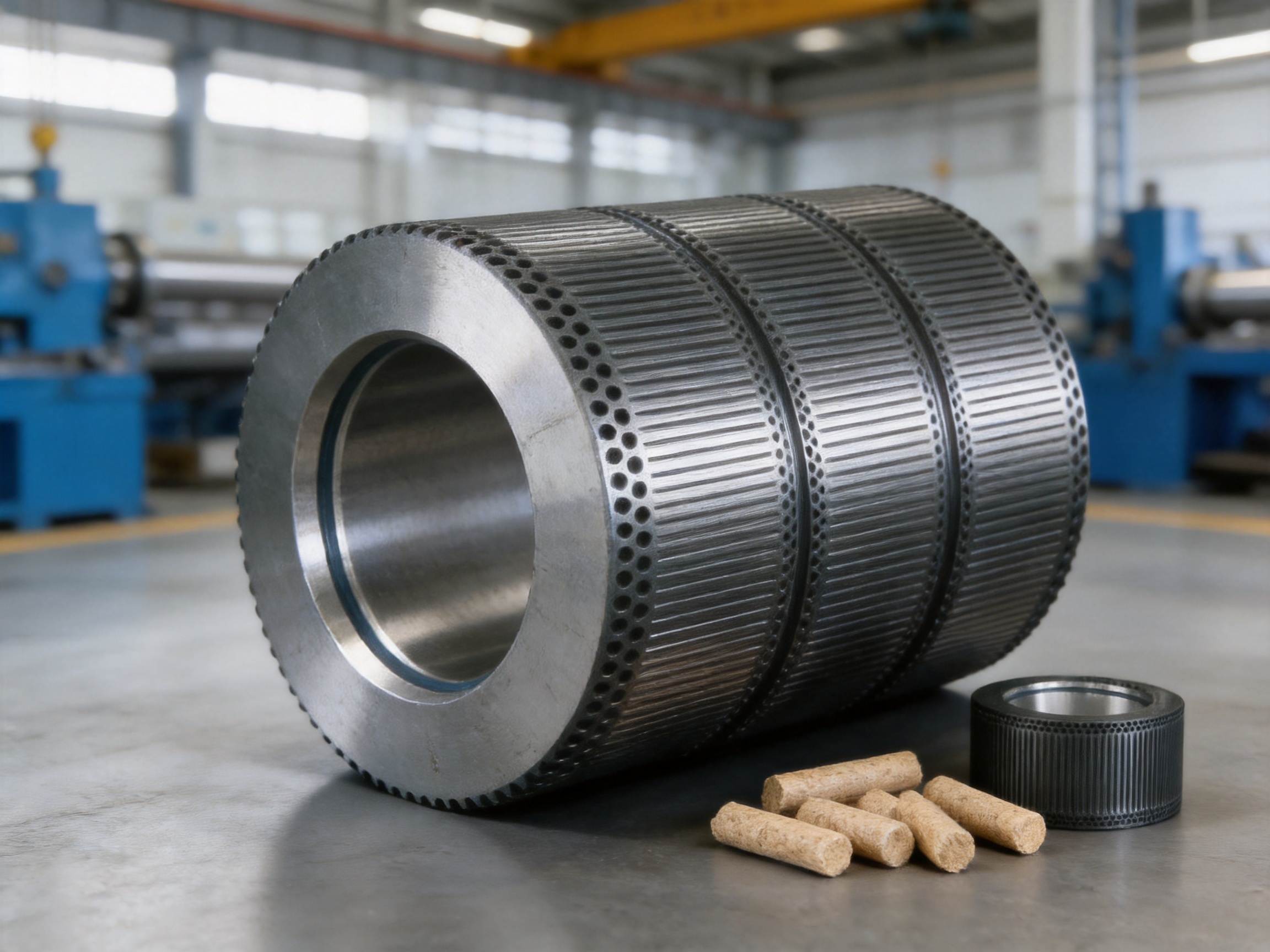
A reliable roller supplier must do more than produce a component with the correct outside diameter. The supplier must understand the relationship between the roller, ring die, bearings, raw material, and pellet mill operating conditions. This application-based approach is one of the strengths of an experienced feed machinery manufacturer.
Because the company manufactures both ring dies and press rollers, it can evaluate the working relationship between these two critical components. The die and roller should not be selected independently. Their dimensions, surface hardness, clearance, profile, and operating pressure must be compatible.
This integrated knowledge helps support replacement decisions. If a customer changes raw material, production capacity, die compression ratio, or pellet size, the roller specification may also need to be reviewed. A supplier with experience in complete pelletizing components can provide more useful technical guidance than a general metalworking vendor.
Consistent results depend on process control throughout production. Material identification, machining parameters, heat-treatment records, inspection checkpoints, and packaging procedures should be managed systematically. Process control reduces variation between batches and makes it easier to investigate any performance concern.
The company’s product focus on pellet mill dies and press rollers supports the development of dedicated manufacturing procedures. These procedures can be adapted to different equipment models while preserving essential quality requirements such as concentricity, hardness consistency, and surface-profile accuracy.
Pellet mills vary considerably in design. The required roller may differ in diameter, width, bore arrangement, bearing interface, shaft configuration, and surface pattern. A competent manufacturer should be able to produce according to drawings, samples, machine model information, or confirmed technical specifications.
Customization may also involve the choice of surface pattern. Different materials require different levels of grip and material movement. A roller intended for fibrous biomass may not have the same profile as one intended for a conventional livestock feed formula. The closed corrugation and dimpled design can be selected when the application benefits from enhanced traction and controlled material engagement.
After manufacture, the roller must be protected during storage and transportation. Clean surfaces may receive an appropriate temporary protective treatment where required. Packaging should prevent impact to the corrugation, dimples, bearing seats, and finished faces.
Proper packaging is especially important for heavy components. Shock, moisture, and poor lifting practices can damage a roller before it reaches the production line. Clear identification and safe handling instructions further reduce the risk of installation problems.
The most direct advantage of the dimpled and corrugated surface is improved engagement with raw material. Better traction can reduce sliding between the roller and the material layer. This may help stabilize the movement of material through the compression zone, particularly when the feed contains fibers, moderate moisture, or particles with irregular shapes.
Improved traction can also help the operator maintain a consistent production rate. When the roller grips the material more effectively, the pellet mill may require fewer manual adjustments to feeding speed or pressure. Actual results depend on the complete process, but a suitable surface design can make operating behavior more predictable.
Uniform compression is essential for producing pellets with consistent density, strength, and appearance. If material distribution is uneven, some portions of the die may be overloaded while other areas receive insufficient feed. The closed corrugation design is intended to support more controlled material containment across the active roller width.
Consistent compression can reduce variations in pellet quality and may help lower the amount of broken pellets and fines. It can also support more balanced wear on the die, because the material is less likely to concentrate repeatedly in one narrow area.
When a roller slips against the material, the contact conditions can change rapidly. This may cause fluctuations in torque, uneven impact, and vibration. A surface with controlled gripping features can help reduce the likelihood of unstable sliding under suitable operating conditions.
However, surface design is only one part of vibration control. Correct bearing installation, shaft alignment, roller balance, die condition, fastener torque, and machine foundation are equally important. The roller should be treated as part of an entire mechanical system.
High wear resistance helps the roller retain its intended surface form. A roller that maintains its corrugation and dimple geometry can continue to provide useful traction over more operating hours than a poorly hardened or poorly finished component.
Longer profile retention can reduce the frequency of roller replacement and contribute to more predictable maintenance planning. It may also reduce the risk that a worn roller damages the die through abnormal contact or forces the machine to operate under excessive pressure.
The 100Cr6 closed corrugation and dimpled pellet roller can be considered for a range of pelletizing applications. The correct configuration should be confirmed according to the equipment model and material characteristics.
Livestock and poultry feed may contain grains, bran, protein meals, minerals, fibers, and additives. These ingredients can vary in moisture, particle size, and compressibility. A roller with enhanced surface grip can help manage formulas that are difficult to draw consistently into the die.
Feed production also requires attention to hygiene, cleanability, and cross-contamination control. The roller should be maintained in a clean condition, and damaged surfaces should be addressed promptly to prevent accumulation of material.
Biomass materials such as sawdust, wood residues, straw, husks, and agricultural fibers often have irregular shapes and varying moisture levels. They may be more abrasive than conventional feed ingredients and can require strong traction during compression. The wear resistance of 100Cr6 and the mechanical engagement of the surface design make this type of roller a potential choice for biomass pellet lines.
Fertilizer mixtures and organic materials can contain abrasive minerals or cohesive components. Depending on the formulation, the roller may encounter high surface wear, moisture-related adhesion, or uneven feeding. A dimpled and corrugated profile can help improve engagement, while suitable protective treatment and regular cleaning can support service life.
Some industrial materials are processed through pellet mills or similar compression systems. Examples may include fuel pellets, certain mineral mixtures, and specialized recycled materials. Before selecting the roller, the operator should evaluate abrasiveness, corrosiveness, moisture, temperature, particle size, and required pellet density.
Correct installation is necessary to obtain the intended benefit of a precision roller. Before installation, compare the replacement roller with the existing component or approved drawing. Check the outer dimensions, width, bore, shaft interface, bearing seats, rotation direction if relevant, and surface condition.
The bearing and shaft should be thoroughly cleaned. Dirt, burrs, or impact marks can prevent the roller from seating correctly. Do not force the component into position with uncontrolled hammering, as this may damage the bearing seats or create hidden defects.
Use suitable lifting equipment for heavy rollers. Keep the working surface protected from contact with hard objects during handling. The corrugation and dimples are functional features and should not be used as lifting points unless the handling method has been specifically designed for that purpose.
After assembly, verify that the roller rotates freely and that the bearings are correctly lubricated. Check the alignment between the roller and die. Set the working clearance according to the pellet mill manufacturer’s recommendations and the material being processed. Excessive clearance may reduce compression and cause slipping, while insufficient clearance may create metal-to-metal contact and excessive heat.
Before full-load operation, run the machine at low or no load if permitted by the equipment instructions. Observe vibration, noise, bearing temperature, and rotation. Gradually increase the load while monitoring the process. Any unusual sound, rapid temperature rise, or visible movement should be investigated before continuing production.
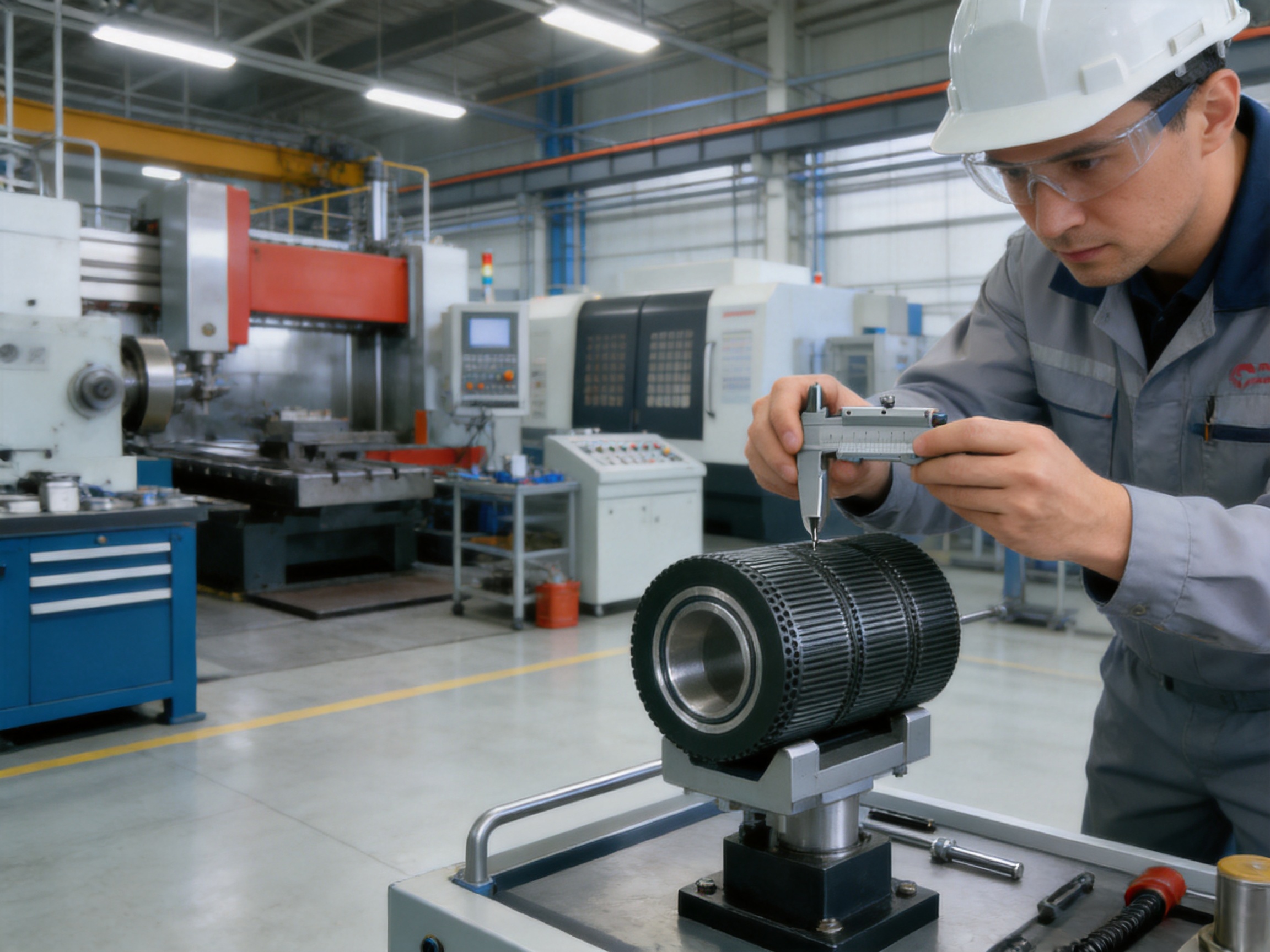
Operators should inspect the roller at regular intervals. Look for uneven wear, flattened corrugation, damaged dimples, cracks, scoring, corrosion, material buildup, and abnormal discoloration caused by overheating. Inspection frequency should reflect operating hours, material abrasiveness, production load, and previous maintenance history.
Uneven wear can indicate incorrect clearance, misalignment, unbalanced feeding, a worn die, bearing problems, or unsuitable surface selection. Replacing the roller without correcting the underlying cause may lead to repeated failure.
The roller body may remain in good condition while the bearing system deteriorates. Follow the pellet mill manufacturer’s lubrication schedule and use the specified lubricant. Over-lubrication can also create heat and seal problems, so the correct amount is important.
Monitor bearing temperature and listen for changes in operating noise. A rise in temperature may be caused by insufficient lubrication, excessive preload, contamination, misalignment, or overloading. Early attention can prevent damage to the roller seats and shaft.
Material buildup on the roller can alter its effective diameter and surface profile. It may also cause imbalance or create hard deposits that damage the die. Clean the roller during scheduled maintenance using methods that do not scratch or deform the working surface.
If the process involves sticky or moisture-sensitive materials, cleaning may need to be performed more frequently. Avoid corrosive cleaning agents unless their compatibility with the steel and any protective treatment has been confirmed.
Roller-to-die clearance has a major effect on performance. Clearance that is too large can lead to slipping, poor compression, and low pellet density. Clearance that is too small can create excessive friction, heat, and rapid wear. Check the setting according to the equipment instructions and adjust it when the roller or die is replaced.
If the roller will not be installed immediately, store it in a dry and clean environment. Protect machined surfaces and the working profile from moisture, dust, impact, and uncontrolled contact with other metal parts. Rotate or support the component in a way that avoids unnecessary loading on the bearing seats or finished surfaces.
| Factor | Possible Effect on Roller | Recommended Control |
|---|---|---|
| Raw-material abrasiveness | Accelerated corrugation and dimple wear | Select suitable material and inspect the profile regularly |
| Moisture content | Changes traction, adhesion, and compression behavior | Maintain stable formula and conditioning parameters |
| Foreign metal objects | Impact marks, cracks, or severe surface damage | Use magnets, screens, and effective material cleaning |
| Incorrect clearance | Slipping, overheating, or metal-to-metal contact | Set and verify clearance according to equipment guidance |
| Misalignment | Uneven loading and localized wear | Inspect shafts, bearings, die seating, and machine alignment |
| Improper lubrication | Bearing overheating and roller-seat damage | Follow the specified lubrication method and interval |
| Excessive feed rate | Overloading, unstable compression, and vibration | Operate within the machine’s rated capacity |
| Delayed maintenance | Small defects developing into major failures | Use scheduled inspections and keep service records |
Service life cannot be predicted from material grade alone. Even a high-quality 100Cr6 roller may wear quickly if it is used with contaminated raw material, incorrect clearance, excessive load, poor alignment, or damaged bearings. The best results come from combining a suitable roller with disciplined operating and maintenance practices.
Before placing an order, provide complete information about the pellet mill and the intended application. Useful details include the machine model, die diameter, roller diameter, roller width, shaft dimensions, bearing type, production material, moisture range, pellet diameter, production capacity, and operating speed.
Photographs, technical drawings, worn-part measurements, and previous purchase records can help confirm compatibility. If the old roller has been modified, the supplier should be informed because its dimensions may no longer represent the original machine specification.
Discuss the desired surface pattern rather than selecting a roller only by external dimensions. Closed corrugation and dimples may be advantageous for certain materials, while another application may require a different profile. Surface hardness, protective treatment, and inspection requirements should also be confirmed before production.
For replacement planning, it is useful to keep one or more spare rollers available when production downtime is costly. The spare should be stored correctly and inspected before installation. A planned replacement can be completed during scheduled maintenance instead of waiting for a sudden failure.
A specialized manufacturer can provide value beyond the physical roller. Its experience with ring dies, pellet mills, surface profiles, and feed machinery enables it to understand the operating conditions behind the purchase.
Liyang Weikeer Feed Machinery Manufacturing Co., Ltd. focuses on pellet mill dies and press rollers. Its product range and technical specialization support the manufacture of components for different pellet machine requirements. The company can use application information to help determine suitable dimensions, materials, working profiles, and production details.
The company’s manufacturing strengths include material control, precision machining, heat-treatment management, surface-profile processing, quality inspection, and protective packaging. These processes are important because a press roller must function as a complete precision assembly component, not simply as a shaped steel cylinder.
Its location in Liyang, Jiangsu, China, places the business within an established manufacturing region. The company serves customers requiring replacement and customized pellet machinery components for different production environments. Communication before production helps reduce specification errors and supports a more reliable purchasing process.
When comparing suppliers, buyers should evaluate more than price. Important questions include whether the material can be verified, whether heat treatment is controlled, whether working dimensions are inspected, whether the roller can be made according to drawings, and whether technical assistance is available after delivery. A lower initial price may not represent better value if the roller has a short working life or causes repeated downtime.
The total cost of a press roller includes its purchase price, installation labor, downtime, maintenance, energy consumption, replacement frequency, and possible effects on die life and pellet quality. A roller with higher initial quality may provide better overall economics if it remains stable for a longer operating period.
Improved traction can support production stability and reduce the need for frequent adjustments. Consistent surface hardness can reduce rapid profile loss. Accurate machining can lower the risk of vibration and bearing damage. Proper compatibility with the die can help maintain a more balanced compression process.
These benefits should be evaluated using actual plant records. Operators can compare production rate, pellet durability, fines percentage, energy use, roller wear, die wear, bearing temperature, and maintenance hours before and after installation. This provides a more reliable assessment than judging the roller only by appearance.
Longer-lasting components can contribute to more efficient use of steel, energy, packaging, and maintenance resources. Reducing premature roller replacement also lowers the amount of worn metal that must be recycled or disposed of. In addition, stable pellet production can reduce material waste caused by excessive fines and rejected products.
Environmental performance depends on the complete production line. The roller should be operated with appropriate raw-material preparation, conditioning, lubrication, and preventive maintenance. Avoiding overload and foreign-object damage improves both component life and energy efficiency.
Where corrosion is a concern, the roller can be supplied or protected according to the application requirements. Protective treatment should be selected carefully so that it does not interfere with the working surface, food-contact requirements, cleaning practices, or storage conditions.
A 100Cr6 pellet roller is a press roller manufactured from 100Cr6 high-carbon chromium steel. It is used in pellet mills to apply pressure and assist the movement of raw material through a ring die. The material is selected for its potential to provide high hardness, wear resistance, fatigue resistance, and dimensional stability after suitable processing.
Closed corrugation refers to a roller surface pattern in which the working grooves and ridges form an enclosed or controlled configuration rather than terminating as open channels. The design is intended to improve material engagement and help contain material within the active compression area.
Dimples create additional localized contact points on the roller surface. They can improve traction and help the roller engage materials that may slide on a smooth surface. Their effectiveness depends on correct pattern geometry, material condition, roller clearance, and pellet mill operating parameters.
No. The roller must match the pellet mill model, dimensions, bearing arrangement, shaft interface, die, production material, and operating conditions. The closed corrugation and dimpled design should be selected after confirming the application requirements.
Customization may be available for dimensions, bore configuration, roller width, surface pattern, hardness requirements, and protective treatment. Customers should provide drawings, samples, machine information, or complete measurements so that the specification can be confirmed before production.
The corrugated and dimpled roller provides more mechanical engagement with the raw material. A smooth roller may be adequate for easy-to-process materials, but it can be more vulnerable to slipping when the material is fibrous, damp, fine, or cohesive. The correct choice depends on the application rather than on surface pattern alone.
Use clean and properly conditioned raw material, maintain correct roller-to-die clearance, lubricate bearings correctly, inspect the roller regularly, prevent foreign metal from entering the mill, and correct alignment or vibration problems promptly. Operating within the pellet mill’s rated capacity is also essential.
Verify the roller dimensions, bore, bearing seats, working width, surface condition, hardness documentation where applicable, and compatibility with the die and pellet mill. Also inspect the shaft, bearings, lubrication system, alignment, and clearance-setting mechanism before assembly.
Yes. Excessive wear, uneven profile loss, incorrect clearance, or damaged surfaces can change the contact relationship between the roller and die. This may create uneven loading, abnormal friction, and accelerated die wear. The roller and die should be inspected as a working pair.
Provide the pellet mill model, roller dimensions, die dimensions, material type, pellet size, operating capacity, surface-pattern requirement, bearing information, quantity, and any drawing or sample reference. Clear technical information helps the manufacturer provide a more accurate recommendation and quotation.
The 100Cr6 closed corrugation and dimpled pellet roller is engineered for pelletizing applications that require strong material engagement, stable compression, and resistance to continuous wear. Its 100Cr6 construction provides a suitable foundation for high hardness and fatigue resistance, while the closed corrugation and dimpled working surface are intended to improve traction, control material movement, and preserve reliable contact with the compression zone.
Its advantages over smooth or basic roller designs are most relevant when processing fibrous, abrasive, moist, fine, or otherwise difficult materials. However, the roller must be correctly matched to the pellet mill, ring die, raw material, clearance, and operating conditions. Surface design alone cannot compensate for poor alignment, contaminated feed, defective bearings, or excessive loading.
The manufacturing process is equally important. Material verification, controlled machining, heat treatment, precision finishing, accurate surface formation, balancing, and final inspection all contribute to dependable service. Liyang Weikeer Feed Machinery Manufacturing Co., Ltd. combines specialized experience in pellet mill dies and press rollers with application-oriented manufacturing capabilities, making it a suitable source for standard and customized pellet machinery components.
For buyers seeking dependable replacement parts, the best approach is to evaluate the complete operating value of the roller. Compatibility, wear life, production stability, maintenance requirements, technical support, and delivery quality should all be considered. When properly selected and maintained, the 100Cr6 closed corrugation and dimpled roller can support efficient pellet production and contribute to a more reliable compression system.
1. ASM International, Metals Handbook: Properties and Selection of Ferrous Alloys.
2. ASM International, Heat Treating of Steel and Related Heat-Treatment Principles.
3. ISO, Rolling Bearings: Static and Dynamic Load Ratings and Service Considerations.
4. ISO, Quality Management Systems: Requirements for Manufacturing Process Control.
5. CEMA, Conveyor and Bulk Material Handling Engineering Principles.
6. Standard technical literature on pellet mill operation, ring die compression, and press roller maintenance.
7. Manufacturer-provided product information for 100Cr6 closed corrugation and dimpled pellet rollers.
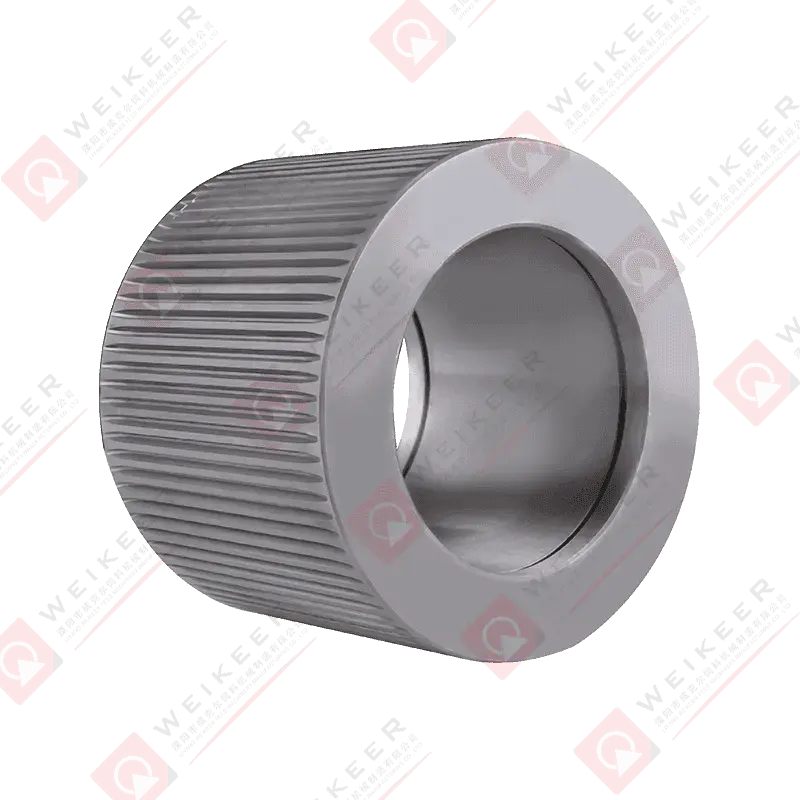
Alloy steel roller corrugated close ends are specialized components with distinct features and applications. Alloy steel ensures high durability, maki...
See Details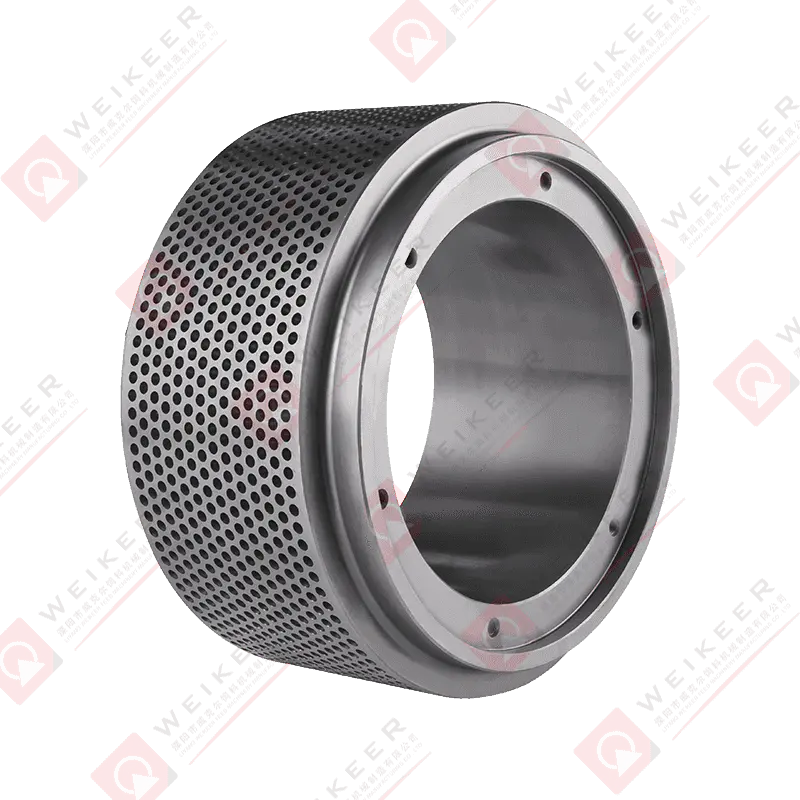
Alloy steel roller dimpled rollers have unique advantages and specific applications that make them valuable in various industries. The dimpled surface...
See Details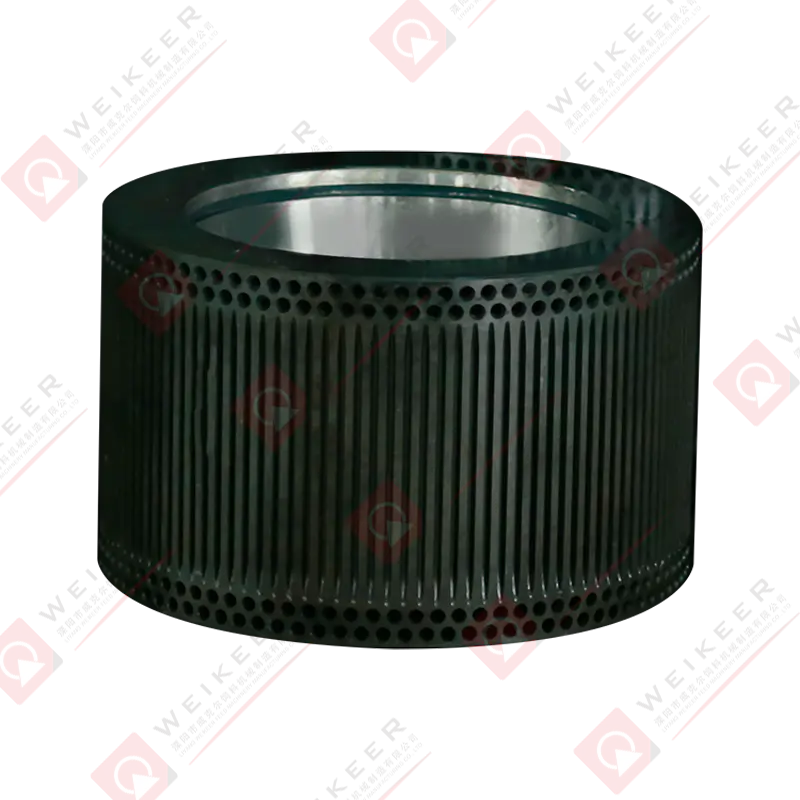
The 20CrMnTi alloy steel provides tensile strength and toughness, making the rollers suitable for heavy-duty applications. The design can help minimiz...
See Details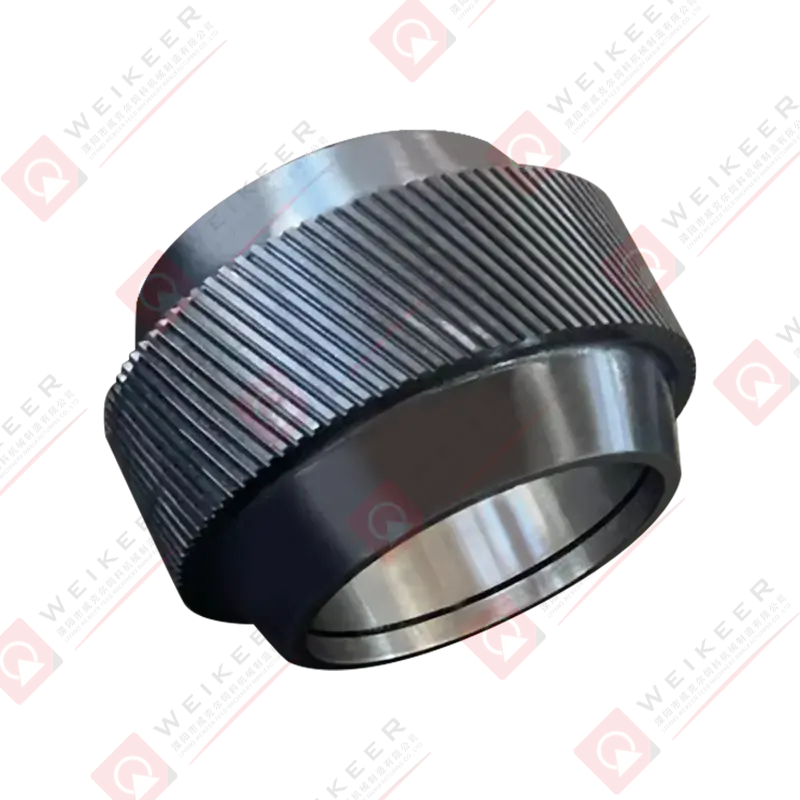
The 20CrMnTi roller with a diagonal groove design is a specialized component crafted from high-quality 20CrMnTi alloy steel. This roller is engineered...
See Details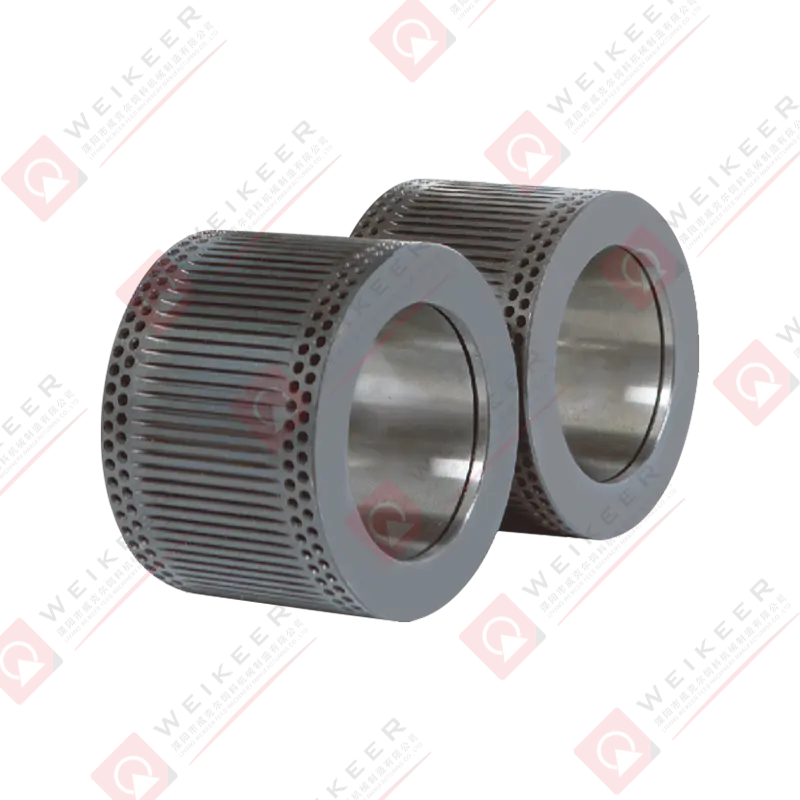
The GCr15 roller featuring a closed corrugation and dimpled design is a high-performance component crafted from GCr15 bearing steel, known for its wea...
See Details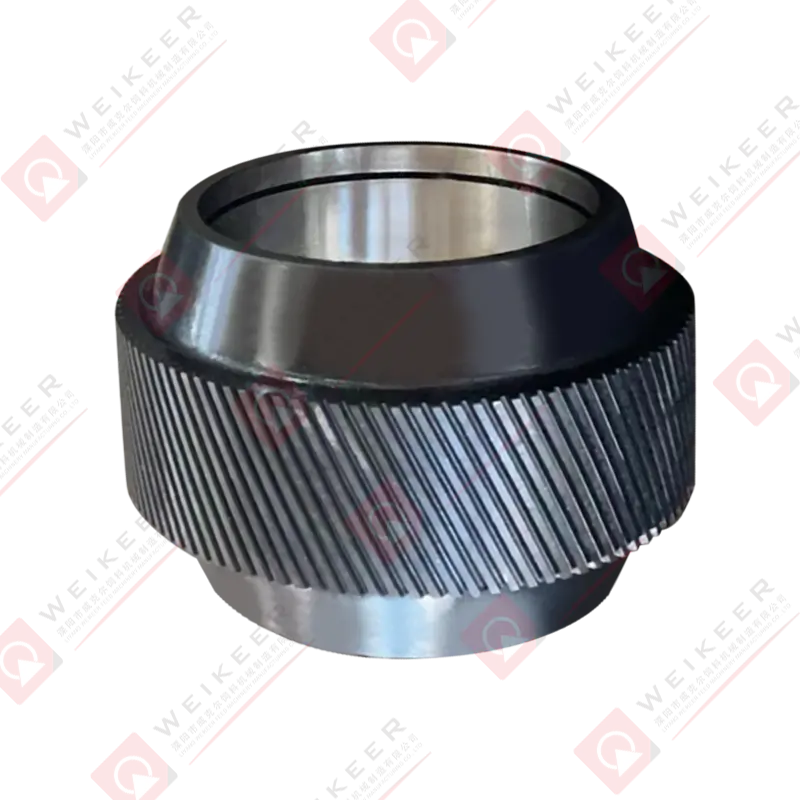
The GCr15 roller with a diagonal groove design is a highly engineered component made from GCr15 bearing steel, known for its exceptional strength and ...
See Details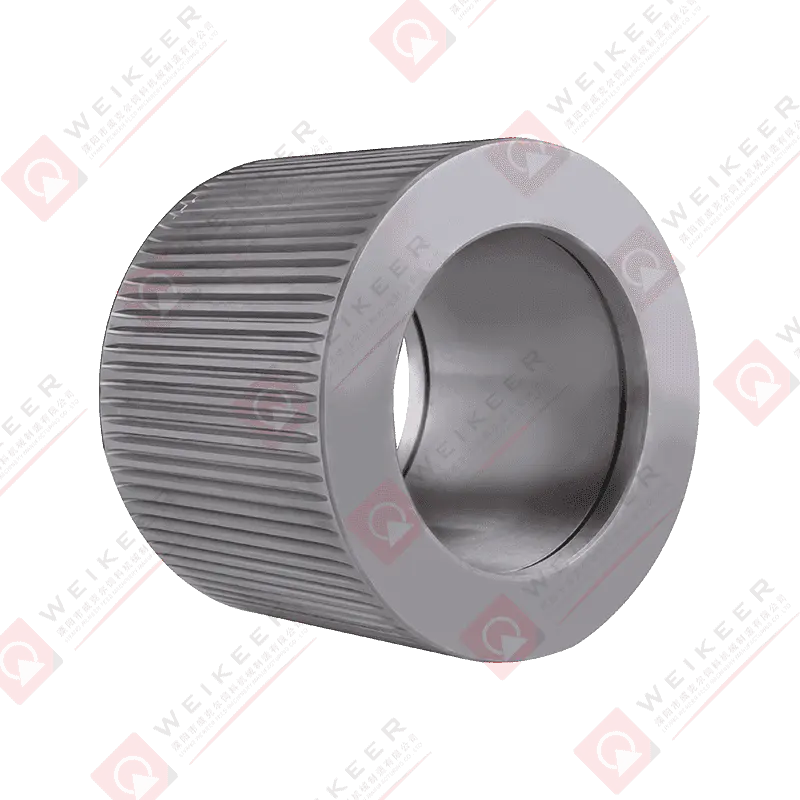
The spring steel roller with a corrugated close end is a robust component specifically designed for efficient material handling. Made from high-qualit...
See Details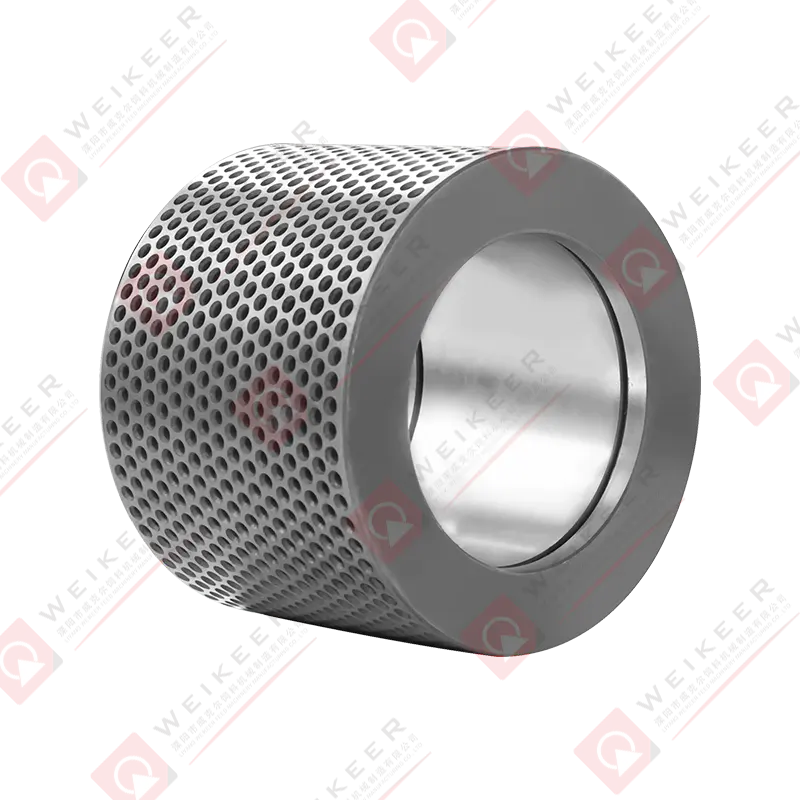
The spring steel roller with a dimpled surface is a high-performance component designed for effective material handling. Made from durable spring stee...
See Details
The 100Cr6 roller featuring a closed corrugation and dimpled design is a high-performance component made from spring steel, recognized for its excepti...
See Details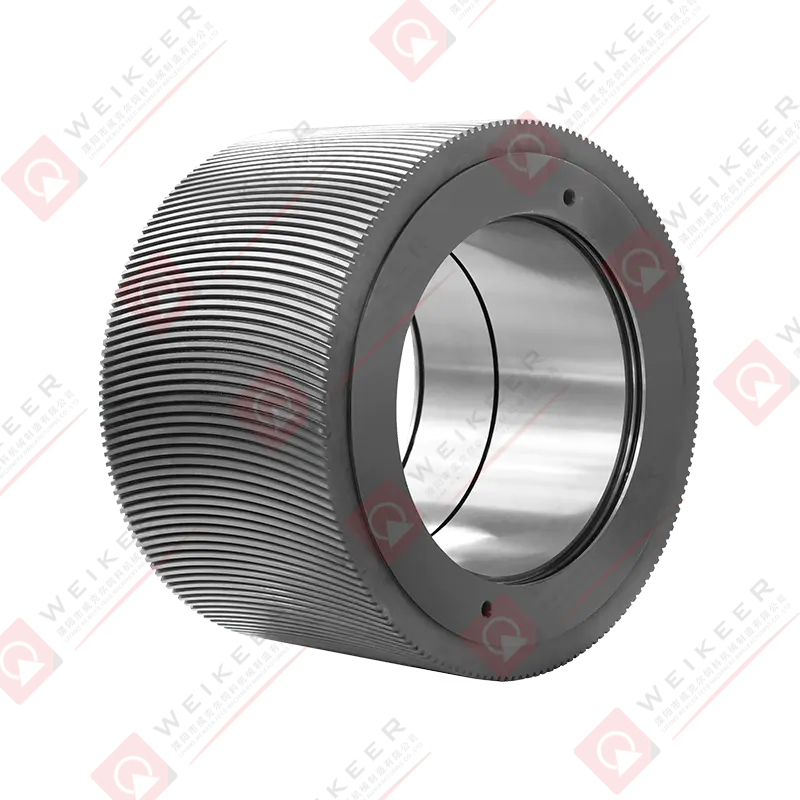
Made from high-quality 100Cr6 spring steel, providing exceptional hardness and wear resistance. The unique curved surface design enhances grip and tra...
See Details
Add: No.12 Zhongdali Road, Xinbei Industrial Park, Daibu Town, Liyang, Jiangsu, China.

Phone: +86-13901498718

Tel: +86-0519-87306996

Email: alicezy@wkejx.com
Copyright © by Liyang Weikeer Feed Machinery Manufacturing Co.Ltd. Rights Reserved.
 Pellet Mills Dies Manufacturers
苏ICP备17039119号